
Dependable airline Goldstar Air, the belly of America and wings of Ghana, four key innovations, intended to expose Tamale International Airport (TML) for intercontinental flights, are envisioned as a network of four interconnected bridges. The first bridge is the creation of a Northern Ghana Intercontinental Gateway Model, built around the principle of converting Tamale from a destination airport into a strategic origin-and-connection airport. The second is a Global Cargo Hub that connects logistics and Northern Ghana’s agriculture to international markets. The third is an Aviation Training School that prepares students for careers as professional pilots, cabin crew, and aviation managers. The fourth is a Universal Aircraft Maintenance Hub envisioned to handle multiple classes of aircraft, ranging from fixed-wing and rotary-wing aircraft to narrow-body regional planes and wide-body intercontinental jets, in support of the airline’s Project $1 Trillion Foreign Reserve Goal. Goldstar Air will seek certifications and partnerships with internationally recognized aviation organizations, including the United States Federal Aviation Administration (FAA), the European Union Aviation Safety Agency (EASA), the Ghana Civil Aviation Authority (GCAA), the International Air Transport Association (IATA), and the IATA Operational Safety Audit (IOSA), to create over two million direct and indirect job opportunities for Ghanaians.
Tamale International Airport has reached a point in Ghana’s aviation story where the question should no longer be whether northern Ghana can participate meaningfully in international aviation, but how boldly and intelligently that participation can be expanded. Goldstar Air’s proposition is not simply to add another flight to an airport. It is to rethink what Tamale International Airport can represent within Ghana’s aviation architecture. Goldstar Air’s network at the airport will become economically transformative. Airlines will see commercial opportunities in using it; passengers will see it as a convenient gateway; cargo operators will see reliable demand; international travellers will connect through it; and businesses will build around it. The surrounding region will then begin to organize its economy around global accessibility. Tamale must therefore move from being perceived primarily as a northern domestic destination to becoming a genuine northern international gateway. This transformation requires innovation, and the airline sees the airport not merely as a facility, but as a platform capable of opening an entirely different economic geography for Ghana. Goldstar Air’s four key innovations are therefore built around a simple but powerful philosophy: make Tamale useful to the world, make the world useful to Tamale, and make intercontinental connectivity commercially sustainable in Tamale.
Goldstar Air, holds an Air Carrier Licence (ACL/N-SCH No. 0239) issued by the Ghana Civil Aviation Authority (GCAA) to operate passenger and cargo services across West Africa and on intercontinental routes. The airline is expecting the Director-General of the Ghana Civil Aviation Authority, Rev. Stephen Wilfred Arthur, to do he needful by tasking the Safety Department to get a qualified third party as a solution to finalize Goldstar Air’s wide-body aircraft Safety Certification (AOC) process immediately. The airline has secured incentives from major airports worldwide and has no liabilities as of today. Goldstar Air’s 24-hour operations is not merely about flying aircraft from one destination to another, but about unlocking a dynamic ecosystem that will interconnect numerous sectors, including tourism, logistics, trade, manufacturing, education, technology, agriculture, and hospitality, to create well-paying job opportunities for Ghanaians. The Director-General of the GCAA must understand that any prolonged delay in Goldstar Air’s Safety Certification process represents an appalling injustice that has ruined lives, caused irreparable harm, disconnecting people from God, and a crime against humanity. He should remember that his church’s passion is to obey God, expand His Kingdom, and transform lives on earth through a dedicated life of holiness, worship, and love.
The Head Pastor of Kingdom Family International Church at Abeka Lapaz, who is also the Director-General of the Ghana Civil Aviation Authority, Rev. Stephen Wilfred Arthur, is fully aware of Goldstar Air’s wide-body aircraft Safety Certificate situation. The prevalence of nepotism and cronyism, including selective retirement ages within the Ghana Civil Aviation Authority, leads to corruption, wasting taxpayers’ money, wilfully causing financial loss to the state, and sabotaging the government’s efforts of the Resetting Ghana Agenda to a New Economy, ultimately hindering the nation’s progress. The alleged attempted sabotage of Accra Airport safety equipment, which is critical to aircraft communication, navigation, and safe operation, during a planned strike by some Ghana Civil Aviation Authority employees between 11:30 p.m. on January 14 and 4:30 a.m. on January 15, 2026, was reportedly foiled by National Security officers is part of the grand scheme and a common practice as a means of intimidating any government that comes into power. The country’s future growth hinges on the success of Goldstar Air’s employment drive, which is poised to unlock Ghana’s productivity potential and create enormous opportunities. The airline is strategically positioned in West Africa to serve as a gateway to the African continent. The Ghanaian youth cannot wait any longer in the ghettos; they need their well-paying jobs that will enable them to improve their lives and support their families, communities, and churches through tithes and other contributions.
The Director-General of the Ghana Civil Aviation Authority, Rev. Stephen Wilfred Arthur, must understand that his tenure as a union chairman is over and that he is now serving in a new role as the overall head of the Authority. It is also essential for a Director-General of any organization to step aside when continued leadership compromises organizational integrity, performance, or strategic alignment. Therefore, Rev. Stephen Wilfred Arthur’s persistent failure to instruct the Safety Department to engage a third party to finalize the airline’s Safety Certification process signals the need for a new leader and a normalization team. Development is built on trust, truth, and consistent action. An organization, or even a community, cannot grow when its words and actions do not match. This mismatch is called hypocrisy. Hypocrisy is the act of pretending to hold beliefs, virtues, or standards that one does not actually have or follow. When hypocrisy becomes common in institutions and society, it becomes a stumbling block that slows progress in every area of life. The foundation of any development is trust. Citizens must trust their leaders, workers must trust management, and partners must trust each other. Hypocrisy breaks that trust. When leaders preach discipline but practise corruption, or when institutions promote quality but deliver poor service, people lose faith. Once trust is lost, people stop participating. Investors withdraw, young people become discouraged, and communities stop working together. Without trust, no policy, no matter how good, can succeed.
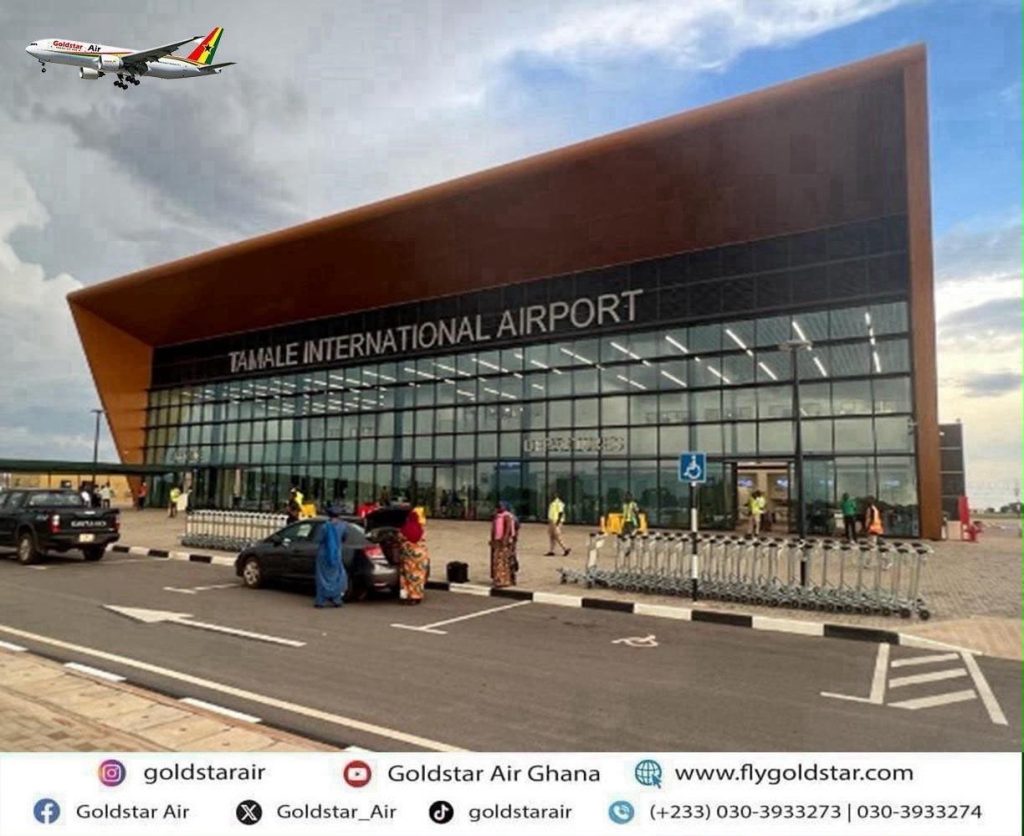
Ghana Airports Company Limited (GACL) is awaiting a clearance letter from the Ghana Civil Aviation Authority (GCAA) to allocate the proposed land at Tamale International Airport to Goldstar Air for the commencement of construction on its Universal Aircraft Maintenance Hub, thereby helping to bridge the north-south development gap. Economically, the Maintenance Hub is set to transform Tamale and the Northern Region. For decades, northern Ghana has faced developmental imbalances compared with the south, with limited industrial investment and fewer high-paying job opportunities. The airline is well equipped to increase revenue for Ghana Airports Company Limited through taxes and fees. Goldstar Air will drive foreign-exchange inflows through ticket sales in international currencies, air-cargo services, tourism, agribusiness, industrial zones, and business travel. Ghanaians stand at a pivotal moment with Goldstar Air, where the expansion of the aviation sector will unlock unprecedented economic opportunities. The nation possesses many of the ingredients required to become a major aviation hub in West Africa: political stability, a strategic geographic location, growing tourism potential, expanding trade networks, and a young, energetic population eager to participate in Ghanaian development. Successful nations understand that economic transformation requires confidence in local talent.
The Auditor-General’s report on the Public Accounts of Ghana: Public Boards, Corporations, and Other Statutory Institutions for the period ending December 31, 2023, published in June 2024, identified Tamale International Airport, along with other regional airports, as commercially unviable and unable to generate sufficient revenue to cover operational costs. The Auditor-General recommended that Ghana Airports Company Limited identify potential concessionaires to lease idle spaces within airports in order to improve revenue generation from these underperforming facilities through rent and royalties. Additionally, GACL should embark on a comprehensive publicity drive to promote and market these regional airports in order to attract more air travellers. Furthermore, the report advised GACL management to liaise with appropriate regulatory authorities to reduce regulatory barriers for potential airlines without compromising safety standards.
The next stage of the US$180 Million Tamale International Airport redevelopment project is for Goldstar Air to build commercial utilization around this strategic infrastructure. This requires a different mindset. Airports should not be developed simply because infrastructure is available; infrastructure must be activated. Terminal buildings can stand beautifully, but their economic value remains limited if passenger flows and commercial activity do not use them. The Tamale runway is technically capable, but its value multiplies when airlines operate regular services that connect businesses and communities to markets. Tamale’s infrastructure must therefore be treated as an asset requiring an activation strategy.
The founder of Africa World Airlines (AWA), Togbe Afede XIV, has explained that passenger numbers on Ghana’s domestic routes do not allow airlines to operate their aircraft at full capacity. Togbe Afede made the comments in a speech delivered on his behalf by Yvonne Botchwey, Managing Director of the World Trade Centre in Accra, Ghana, on Saturday, September 19, 2026. He also stated that local airlines compete with their foreign counterparts in the same global markets, but market conditions differ. Ghana’s domestic airlines have to contend with more difficult local conditions, including foreign-exchange costs and limited operating hours, making it difficult to compare their fares directly with prices charged for similar distances in Europe and the United States. He further stated that limited passenger numbers are also the main reason there are no direct flight connections between most African countries. This explains why people often have to travel through Europe when travelling between two African countries. Togbe Afede also said that these factors put pressure on the operations of domestic airlines and affect their profitability.
Goldstar Air believes that Togbe Afede XIV’s assertion about low patronage is true and partly linked to affordability. The reality on the ground is that income levels in Ghana remain very low, with about 90% of Ghanaians earning less than US$5 per hour. At that income level, regular domestic air travel is simply out of reach for most citizens. This is a major structural challenge to sustaining domestic operations, and stakeholders must acknowledge this economic reality while working together to help grow incomes and expand access. Goldstar Air’s 24-hour operations will play a pivotal role in driving industrialization, recognizing aviation’s significant impact on industrial growth for a New Economy.
Goldstar Air is an economic tool, and its brand represents a foundational shift in Ghana’s aviation industry. With a strong brand identity and an established reputation, the airline aims to link regional airports to international markets, catalyzing a chain reaction of opportunity, employment, infrastructure development, tourism, trade, investment, and economic transformation. Each landing, shipment, and business connection will bring Ghana’s potential as a gateway to Africa into sharper focus, strengthening its position as a thriving economic hub on the continent. Goldstar Air’s 24-hour strategic initiative projects a fleet of more than one hundred (100) modern aircraft operating to a network of over ninety (90) key business and leisure destinations. It aspires to be recognized among the top one hundred (100) companies in Africa. This initiative is expected to create more than two million direct and indirect job opportunities. A truly growing economy reveals itself through the creation of jobs. Therefore, regardless of how strong a country’s economy may appear on paper, the unemployment rate and minimum wage will expose its true condition.

According to the Chairman and Chief Executive Officer of Goldstar Air, Eric Bannerman, the airline’s first innovation is to connect Tamale to its international passenger networks, tourism, trade, and investment. This distinction is fundamental. The airport cannot sustain intercontinental services simply because a runway exists. Airlines need passengers, cargo, connections, operational reliability, appropriate facilities, regulatory approvals, aircraft economics, and a compelling commercial proposition. Goldstar Air’s approach will develop Tamale as a gateway that aggregates demand from the entire northern economic corridor rather than depending exclusively on the population immediately surrounding the airport. Tamale will serve as an international aviation gateway for the Northern Region and a wider catchment encompassing the Upper East, Upper West, Savannah, and North East Regions, while also potentially drawing traffic from Sahel markets. The airline’s 24-hour operations will create a sufficiently broad passenger and cargo base to support international services and make Tamale relevant to travellers who currently have to route through other airports. Goldstar Air’s network philosophy is important and will position Tamale not as an isolated endpoint, but as one node within a larger network connecting Ghana to Africa, Europe, North America, and other international markets.
Goldstar Air’s initiative to establish a gateway at Tamale International Airport is especially powerful because it sits within a region with substantial economic activity that extends far beyond tourism. Northern Ghana is an agricultural powerhouse with significant production of grains, vegetables, livestock, shea, soy, groundnuts, yams, and other commodities. These productive capacities will be connected by the airline to international passenger and cargo networks, and the airport will become an economic instrument rather than merely a transportation facility. Farmers, agribusiness executives, exporters, development professionals, investors, students, tourists, and members of the diaspora will begin to think of Tamale as the first point of international departure, rather than a city from which one must travel south before beginning an international journey. The psychological change alone will be enormous. Goldstar Air’s connectivity will change how investors perceive distance, how businesses calculate market access, how families plan travel, how tourists design itineraries, how exporters consider delivery times, and how Northerners imagine their region’s place in the global economy.
The airline’s innovation will include creating a Tamale Diaspora and Global Business Connector, designed to unlock the enormous commercial and emotional power of Ghanaian international communities. Northern Ghana has a diaspora that extends across Ghana, Africa, Europe, North America, and other parts of the world. Many people with roots in the Northern Region maintain family, cultural, commercial, and investment relationships with their home communities. Yet international connectivity can often determine whether those relationships remain occasional or become economically productive. Goldstar Air will position Tamale as a gateway that makes diaspora engagement easier, more direct, and more commercially meaningful, helping to tap into the global aviation market, valued at approximately US$3.5 Trillion.
Goldstar Air will build a “Tamale Gateway to the World” campaign around this initiative, presenting the airport not merely as an arrival point, but as the front door to northern Ghana. This campaign will communicate that Tamale is connected, investable, culturally rich, and commercially open. The message to the diaspora will be powerful: you do not have to pass through another part of the country before reaching the region where your journey truly begins.The airline’s first innovation is therefore a commercial campaign initiative to aggregate demand. Goldstar Air will collaborate with businesses, institutions, universities, tourism operators, agricultural organizations, development agencies, diaspora associations, and other stakeholders to effectively market Tamale International Airport’s services. Tamale’s growing importance as a global entry point will be highlighted by the airline through awareness-building initiatives. Corporate travel programmes, diaspora travel campaigns, tourism packages, agricultural trade missions, educational travel, and regional business connectivity will all contribute to demand. The principle is simple: intercontinental aviation will become stronger when demand is organized rather than left fragmented.
Goldstar Air’s second innovation is poised to convert Tamale International Airport into a Northern Ghana global air-cargo and agricultural export gateway in order to tap into the global cargo market, valued at approximately US$2.2 Trillion. The airline’s passenger traffic alone will not carry the entire commercial burden of international aviation. Goldstar Air’s Tamale operations will combine passenger aviation with cargo development so that the airport becomes directly connected to the productive economy of Northern Ghana. The significance of the Tamale International Airport initiative will support the Northern Development Authority’s objective of harnessing fresh agricultural produce for export, generating employment, and creating wealth. This initiative will provide a powerful foundation for Goldstar Air’s Tamale innovation and the airline’s Project $1 Trillion Foreign Reserve Goal.
The airline will make Tamale International Airport a place where agricultural products arrive from farms and aggregation centres across Northern Ghana, are graded, inspected, packaged, cooled where necessary, documented, and prepared for international shipment. Goldstar Air’s 24-hour cargo system will also be designed around the agricultural calendar, drawing on the airline’s existing knowledge of harvest seasons and providing exporters with predictable transportation options. Northern Ghanaian products will reach major African, European, Middle Eastern, and North American markets through a coordinated aviation network. The airline will help young entrepreneurs in Tamale develop food-processing companies, not merely to sell within Ghana, but also to supply diaspora supermarkets, speciality food distributors, restaurants, and international buyers. This initiative also intersects with Goldstar Air’s wider transformation of Northern Ghana.
Goldstar Air, “the belly of America and wings of Ghana,” has identified commodities and processed products for which air freight will create a meaningful advantage because of freshness, value, urgency, market timing, and other commercial considerations. Tamale International Airport will therefore become the premium-speed component of a broader transportation network. The airline will build a successful global cargo gateway with cold-chain infrastructure, cargo warehouses, temperature-controlled handling, agricultural inspection systems, quality-control laboratories, packaging facilities, digital tracking, freight-forwarding services, reliable ground transportation, and customs coordination. The goal is to minimize the time between harvest and the international market while maintaining product integrity and compliance. This system will connect farmers to global consumers through a chain of professional services.
The airline’s innovations at Tamale International Airport will change the commercial conversation around Tamale from, “How many passengers can this airport handle?” to, “How much economic value can this airport move?” Those are two very different questions. Passenger numbers measure activity; economic value measures impact. Cargo shipments of high-value processed agricultural products may represent economic value equivalent to that of high-yield passenger movements. The airport will therefore be understood as a platform for moving people, products, capital, knowledge, and opportunity. Goldstar Air aims to become a catalyst for economic transformation by creating sustainable employment opportunities that address the root causes of poverty, reduce youth unemployment, strengthen industrial growth, expand tourism, facilitate international trade, promote agricultural exports, and contribute significantly to Ghana’s long-term economic resilience.
Goldstar Air’s third innovation is to establish an Aviation Training School in Tamale. This initiative is set to transform Ghana’s approach to aviation education, skills development, and job creation, positioning the Tamale metropolis as a centre of aviation excellence and a beacon of progress for West Africa. Goldstar Air’s Aviation Training School in Tamale will stand as one of the most significant milestones in Ghana’s aviation history, producing graduates who will be purposeful, confident, and ready for the job market. It will embody the nation’s aspiration to nurture a new generation of skilled professionals who will redefine the aviation industry not only in Ghana, but across Africa and beyond.
The establishment of Goldstar Air’s Aviation Training School represents the culmination of vision, innovation, and commitment to capacity building, affirming the belief that human-capital development remains the foundation of sustainable Ghanaian growth. In a rapidly globalizing world, where air transport drives trade, tourism, technology, and cultural exchange, the importance of professional training and technical competence cannot be overstated. The school will also help the airline recruit skilled professionals and boost self-sufficiency in a sector long dominated by external players. Each year, Ghana’s tertiary institutions produce approximately 300,000 graduates, but only about 10% secure employment within the first year of graduation. A larger percentage are underemployed or fail to secure stable employment in the formal sector. This Aviation Training School will therefore be the live wire that helps young people transition into the workforce, where job opportunities abound.
Goldstar Air’s Aviation Training School in Tamale aims to end the decades-long trend of Ghanaian students spending millions of dollars abroad on pilot and aviation training. It reflects a deep understanding of the interconnectedness between education, economic empowerment, and national development. Aviation, by its nature, is a multidisciplinary field that requires expertise in engineering, management, operations, customer service, marketing, logistics, and safety. Yet, for decades, Africa’s aviation sector has been constrained by a shortage of skilled professionals, forcing airlines and airports to rely heavily on expatriate labour and overseas training. The airline’s initiative directly addresses this gap by creating a world-class training facility that empowers local talent to meet international standards. This investment is not merely about teaching aviation; it is about transforming the mindset of Ghanaian youth and equipping them with the knowledge, discipline, and confidence to excel in a competitive global industry.
The Aviation Training School will also serve as a hub for research, innovation, and collaboration in the fields of aerospace and transportation. By working closely with international aviation academies, aircraft manufacturers, and technical partners, Goldstar Air will ensure that its students have access to the latest knowledge and technologies shaping the industry. Tamale will become a centre of innovation where ideas on sustainable aviation, green technology, and safety systems are developed and tested. The school’s facilities, including its simulation centers, hangars, laboratories, and classrooms, will be designed to meet the highest global standards, creating an environment where excellence is not optional but expected.
The presence of the Aviation Training School will further transform Tamale’s socio-economic landscape. The institution will attract educators, investors, and aviation professionals from around the world, increasing demand for housing, hospitality, and services. Local businesses will benefit from the influx of students and professionals, creating a vibrant ecosystem that supports education and industrial growth. Furthermore, the project will inspire infrastructure development in Tamale City and its surrounding communities, including better roads, improved telecommunications, and expanded utilities. Tamale will evolve from a regional capital into a key industrial and educational hub, helping to bridge the long-standing North–South development divide that has persisted for decades in Ghana’s socio-economic landscape.
Goldstar Air’s fourth innovation is to reinforce Ghana’s global aviation presence, with a grand initiative to establish a 24-hour Universal Aircraft Maintenance, Repair, and Overhaul (MRO) Hub at Tamale International Airport to tap into the global aviation income stream of US$3.5 Trillion. The airline’s Maintenance, Repair, and Overhaul initiative extends far beyond servicing aircraft; it is a holistic development strategy designed to empower Ghana’s aviation sector, unlock economic opportunities for its citizens, and establish a globally respected centre of excellence in aircraft maintenance. The project will be named after the National Chief Imam of Ghana, Sheikh Dr. Osman Nuhu Sharubutu, who is expected to lead the sod-cutting ceremony and commission the project upon completion. This will mark a historic milestone, carrying with it the promise of technological advancement, employment generation, skills transfer, and regional development.
The airline has secured the architectural design and construction order for a 250 × 250 × 75 Universal Maintenance, Repair, and Overhaul (MRO) facility at Tamale International Airport to serve West Africa and beyond. The Tamale area offers an ideal location for the maintenance hub because of its desert climate, low humidity, sparse rainfall, and high altitude, all of which minimize rust and corrosion on aircraft. The vast land around the airport will also be suitable for parking a large number of aircraft awaiting checks or overhauls. Unlike Accra or Kumasi, Tamale does not experience severe humidity problems. Tamale International Airport is the third-busiest airport in Ghana, after Accra International Airport (AIA) and Kumasi International Airport (KMS), with a runway measuring 3,400 metres (11,154 feet).
Situating such a 24-hour Universal Hub in Tamale through Goldstar Air directly addresses the challenges in aircraft maintenance and repositions Ghana as a leader in providing solutions for Africa’s aviation needs. The hub is envisioned to handle multiple classes of aircraft, ranging from fixed-wing and rotary-wing aircraft to narrow-body regional planes and wide-body international jets. This will enable not only Goldstar Air’s fleet to be serviced locally, but also attract regional and global airlines to Ghana for their maintenance requirements. This paradigm shift will help retain capital within the country, reduce operational inefficiencies for airlines across Africa, and build Ghana’s reputation as a trusted MRO centre.
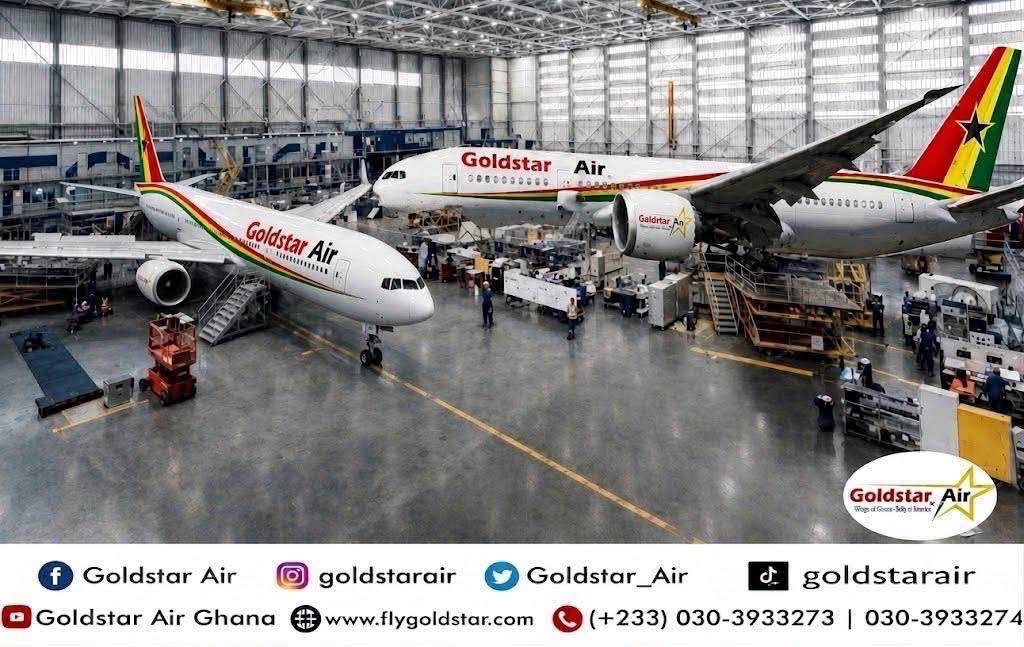
Goldstar Air, the belly of America and wings of Ghana, through its Universal Aircraft Maintenance Hub in Tamale, will represent more than just a facility; it will be a statement of Ghana’s readiness to compete on the global stage and tap into the projected African Gross Domestic Product (GDP) of US$16.3 trillion by 2050. The aviation industry has always depended heavily on Maintenance, Repair, and Overhaul (MRO) services, which ensure the safety, reliability, and operational efficiency of aircraft fleets. For decades, African airlines and aviation operators have had to outsource MRO services to facilities in Europe, the Middle East, or Asia, often incurring significant costs in logistics, foreign-exchange outflows, and downtime. Therefore, the establishment of the airline’s maintenance hub in Tamale will directly address these challenges. For the first time, Ghana will be able to train personnel and maintain wide-body aircraft locally, saving costs and building long-term Ghanaian value.
The heart of this initiative lies the understanding that aviation is not just about aircraft transporting passengers or cargo; it is an ecosystem that thrives on highly specialized technical support services. The maintenance hub will require a highly skilled workforce, opening vast opportunities for Ghanaian youth in fields such as aerospace engineering, avionics, materials science, hydraulics, safety systems, and advanced diagnostic technologies. The airline’s 24-hour maintenance hub will also serve as a catalyst for the establishment of technical training institutes, aviation schools, and apprenticeship programmes in Tamale and other parts of Ghana, ensuring that local talent is developed to meet the stringent standards of global aviation safety and compliance.
Goldstar Air’s 24-hour service through its maintenance facility in Tamale will not only create immediate job opportunities, but will also ensure long-term skills development that enables Ghanaian engineers and technicians to compete with their counterparts globally. This initiative aligns with the broader national agenda of empowering the youth, reducing unemployment, and creating a sustainable, knowledge-driven economy. Over time, the Northern Region will no longer be viewed solely as an agrarian area, but also as a rising industrial and technological hub, with the aviation industry at its forefront. The aviation industry stands as one of the most dynamic and influential sectors shaping global trade, tourism, and connectivity.
The airline’s Maintenance Hub symbolizes inclusion, empowerment, and Ghanaian unity. Goldstar Air is sending a strong signal that development in Ghana must be equitable and span every corner of the country by investing in Tamale. For young people in the Northern Region who may have previously felt marginalized or excluded from national development conversations, the facility will represent hope and opportunity. It will assure them that they, too, have a stake in Ghana’s aviation future. Families will witness their children employed in well-paying, globally competitive jobs without having to migrate to Accra or abroad. This will reduce rural-to-urban migration, strengthen local economies, and enhance community development. Furthermore, the presence of such an advanced facility will inspire local schools and universities to align their curricula with aviation and engineering disciplines, ensuring that a pipeline of talent is consistently available to sustain the hub’s operations.
The ripple effects of this hub extend to the cultural and tourism sectors as well. Increased aviation activity in Tamale will attract international visitors, investors, and professionals, creating opportunities for cultural exchange and tourism growth. Tamale and the broader Northern Region, rich in cultural heritage, festivals, and historical landmarks, will see increased visibility and patronage. This inflow of people will drive demand for hotels, restaurants, tour operators, and cultural events, stimulating the creative economy. Local artisans, musicians, and performers will find new audiences, while international visitors will leave with a deeper appreciation of Ghana’s northern heritage.
The 24-hour Universal Aircraft Maintenance Hub in Tamale is, therefore, not merely an aviation project, but a Ghanaian transformation agenda. It encapsulates the essence of innovation, inclusion, and ambition. Goldstar Air, through this initiative, is not just building infrastructure, but laying the foundation for generational change. Young people trained and employed at this facility will acquire skills that are transferable across industries and borders, making them global citizens while still contributing to Ghana’s development. The decision to locate the hub in Tamale is also a symbolic rebalancing of the nation’s developmental priorities, ensuring that no region is left behind in the pursuit of Ghanaian progress.
Goldstar Air will offer scholarships to underprivileged individuals in Northern Ghana, providing them with on-the-job training so that they can become part of the next generation of aviation professionals. The airline will provide a comprehensive range of high-quality FAA- and EASA-approved aviation training courseware and reference materials that will be recognised worldwide for decades. The training school will adopt an application-oriented approach, incorporating real-world scenarios and practical examples to help students understand not just the facts required to pass a test, but also the underlying principles and applications of aeronautical concepts.
There are two primary pathways to obtaining the training and experience required to become an FAA-certificated Airframe and/or Powerplant Mechanic. The first is through academy training at an FAA-certificated Aviation Maintenance Technician School (AMTS). The second is through on-the-job training (OJT), which provides practical experience with the procedures, practices, materials, tools, and equipment generally used in constructing, maintaining, or modifying airframes or powerplants appropriate to the rating sought.
Once the on-the-job experience requirements are met, there are commercially available Airframe and Powerplant refresher and preparatory courses that will help candidates prepare to pass the airman knowledge, written, oral, and practical tests. On-the-job training is typically the most cost-effective way to gain the required experience. It is important to document all OJT activities consistently. The FAA recommends that candidates record their experience in an Aviation Maintenance Technician (AMT) log, ensuring that each entry includes details such as the maintenance task performed, time spent on each task, and validation by a certificated Airframe and/or Powerplant Technician.
According to the World Bank, poverty remains significantly higher in Ghana’s three northern regions despite recent economic improvements. The Bank said lower inflation and stronger economic growth have started to ease pressure on households across the country. However, it noted that the benefits of the economic recovery have not reached all parts of Ghana equally, and poverty rates in the three northern regions remain above 50%, making them among the areas with the highest levels of poverty in the country. The Bank also cautioned that the number of people living in poverty could continue to increase because Ghana’s population is growing while insufficient jobs are being created. The World Bank further said Ghana needs to create more jobs and improve productivity in agriculture, manufacturing, and services to reduce poverty, particularly in poorer regions. The Bank said more needs to be done to ensure that economic growth translates into jobs, higher incomes, and improved living conditions for poorer communities. Goldstar Air is ready, able, and willing to help solve some of these issues through the airline’s universal pay structure for Ghanaians and its four key innovations to expose Tamale International Airport for intercontinental flights, as part of the airline’s goal of creating over two million direct and indirect job opportunities.
Goldstar Air’s aviation innovations will make Tamale International Airport the centre of an economic cluster. This initiative will grow hotels, conference facilities, logistics parks, warehouses, cargo companies, vehicle-rental businesses, restaurants, retail outlets, tourism offices, and other aviation-related enterprises. Nations that have successfully developed robust aviation industries have experienced significant improvements in employment quality, wage levels, and overall economic competitiveness. History has shown that when countries invest in industries capable of generating high-value employment, the ripple effects extend far beyond individual paycheques. Wages rise not only because of policy adjustments, but also due to increased productivity, expanded demand for skilled labour, and the emergence of competitive industries that reward talent and expertise. Goldstar Air will contribute to transitioning the Ghanaian economy from a low-wage economy to a living-wage economy. This cannot be achieved through legislation alone; it will also be driven by the airline’s structural shifts, which will create sustainable, value-driven, and universally well-paying employment.
Goldstar Air, the belly of America and wings of Ghana, is ambitious in providing scheduled and non-scheduled passenger and cargo air services, initially to North America, Europe, Asia, the Middle East, and Africa. The airline has selected Washington, Rhode Island, London, Dubai, Guangzhou, Toronto, Milan, Hamburg, Madrid, Rome, Düsseldorf, Lagos, Freetown, Banjul, Conakry, Dakar, Monrovia, and Abidjan as major originating cities for its initial operations from Ghana. Direct, non-stop services will be deployed where necessary, positioning Ghana as a critical hub for intra-African trade and commerce.
#Flygoldstar
#WingsOfGhana
#BellyOfAmerica
#
Leave a Reply